UPI App Guide For Safer Payments And Daily Money Control
A UPI app helps users send money, receive payments, scan QR codes, pay merchants, recharge mobile numbers, settle bills, and manage everyday digital transactions through a linked bank account. It has become a common payment method because it is quick, simple, and widely accepted across shops, services, and online platforms.
However, convenience should not replace caution. Users should always check the receiver name, payment amount, UPI ID, QR code, and transaction status before entering the UPI PIN. A UPI app can make payments easier, but safe usage depends on careful verification and disciplined money management.
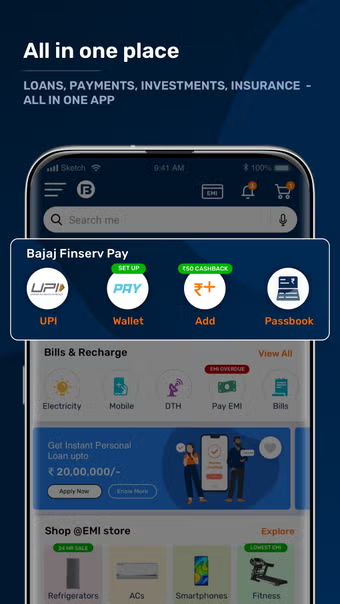
Offer Awareness After Introduction
A upi offer may provide cashback, discounts, rewards, or limited-period benefits on eligible transactions. However, users should not make unnecessary payments only to claim a reward. The actual value of any upi offer should be checked along with eligibility rules, minimum transaction amount, validity, and credit timeline.
A upi offer can be useful when it applies to a payment the user already planned to make. It should not encourage overspending or repeated transactions. Users should read the terms clearly before assuming that every payment will receive a benefit.
What Is A UPI App
A UPI app is a mobile platform that allows users to make bank-to-bank payments using the Unified Payments Interface. Once a bank account is linked, users can create a UPI ID and make payments using a UPI PIN.
The app may support QR payments, contact transfers, merchant payments, bill payments, transaction history, payment reminders, and account balance checks. The exact features may differ by platform, but the core purpose remains the same, which is to make digital payments simple and accessible.
How A UPI App Works
A UPI app works by connecting a user’s bank account with a payment interface. The payment is completed after the user authorises the transaction.
Bank Account Linking
The user links a bank account connected to the registered mobile number.
UPI ID Creation
The app creates or allows the user to create a UPI ID for payments.
UPI PIN Setup
The user sets a UPI PIN to approve outgoing payments.
Payment Selection
The user chooses QR code, mobile number, UPI ID, or saved contact.
Transaction Confirmation
The user checks details and enters the UPI PIN.
Status Update
The app shows whether the payment is successful, pending, or failed.
Common Uses Of A UPI App
A UPI app can be used for several daily payment needs. It is useful for both small and regular transactions.
Common uses include:
- Paying local shops
- Sending money to family
- Paying service providers
- Recharging mobile numbers
- Paying utility bills
- Settling food orders
- Shopping online
- Paying travel fares
- Receiving money
- Tracking payment history
Because UPI payments are easy to complete, users should review transaction history regularly to avoid losing control over small daily expenses.
Benefits Of Using A UPI App
A UPI app can offer practical benefits when used carefully.
Quick Payments
Users can complete payments within a few steps.
Direct Bank Transfers
Money moves directly between linked bank accounts.
QR Code Convenience
Users can scan and pay without entering account details manually.
Digital Records
Transaction history helps users track past payments.
Wide Acceptance
Many merchants, billers, and platforms accept UPI payments.
Useful For Small Transactions
UPI is convenient for daily purchases, transfers, and local payments.
Safety Checks Before Making Payments
Users should follow basic safety checks before completing any UPI transaction.
Important checks include:
- Verify receiver name
- Check payment amount
- Confirm UPI ID
- Avoid unknown payment links
- Do not share UPI PIN
- Do not share OTP
- Avoid approving unknown collect requests
- Keep the phone locked
- Use official apps only
- Review bank alerts
A UPI PIN is required to send money, not to receive money. Users should remember this to avoid fraud attempts.
Managing Failed Or Pending UPI Transactions
Sometimes a transaction may show as pending or failed even after the amount is debited. In such cases, users should avoid paying again immediately.
A careful process includes:
- Check transaction history
- Confirm debit message from bank
- Wait for status update
- Save transaction reference
- Contact app support if needed
- Contact bank if the issue continues
- Avoid repeated payments for the same bill or merchant
Most payment issues can be tracked using transaction ID and app records.
UPI App And Spending Control
A UPI app can help users understand their daily spending if transaction history is reviewed regularly. Small payments for snacks, travel, groceries, online orders, and subscriptions can add up over a month.
Users can improve spending control by:
- Reviewing weekly transaction history
- Separating essential and optional expenses
- Setting monthly payment limits
- Avoiding unnecessary small purchases
- Saving receipts for important payments
- Tracking repeated subscriptions
- Keeping emergency funds separate
- Checking bank balance regularly
Digital convenience should be supported by budgeting discipline.
Common Mistakes To Avoid
Users should avoid common mistakes while using a UPI app.
Paying Without Checking Receiver Details
Incorrect receiver details may lead to wrong transfers.
Entering The Wrong Amount
A typing mistake can cause an incorrect payment.
Approving Unknown Requests
Fraudsters may send collect requests that look like payment confirmations.
Clicking Reward Links
Fake cashback or refund links can be risky.
Ignoring Payment Status
Users should check whether the transaction is successful, failed, or pending.
Not Tracking Small Payments
Frequent small payments can disturb monthly budgeting.
UPI App For Bill Payments
Many users pay electricity, mobile, broadband, gas, water, and other bills through UPI-supported apps. This can reduce manual effort and help users pay before the due date.
Before paying bills, users should check the biller name, consumer number, due date, and amount. After payment, they should save the receipt or transaction reference. If payment is debited but the bill is not updated, users should wait for confirmation before trying again.
UPI App For Small Businesses
Small businesses and local shops often use UPI payments because customers can pay through QR codes. This reduces cash handling and makes payment collection easier.
For merchants, UPI records can help with:
- Daily collection tracking
- Customer payment confirmation
- Reduced cash dependency
- Easier reconciliation
- Faster payment records
- Simple QR-based acceptance
Merchants should still compare app records with bank statements regularly.
Credit Decisions Before Urgent Borrowing
An instant loan may appear helpful when a user faces a sudden expense or temporary payment gap. However, an instant loan should not be taken only because the application process is quick. Borrowers should first check whether the repayment will fit their monthly budget.
Before taking an instant loan, users should compare interest rate, EMI, tenure, processing fee, late payment charges, and total repayment amount. An instant loan can solve an immediate need, but careless borrowing can create future repayment pressure.
Conclusion
A UPI app can make daily payments faster, easier, and more organised. It supports money transfers, QR payments, merchant payments, bill payments, and transaction tracking through a linked bank account.
To use it responsibly, users should verify payment details, protect their UPI PIN, avoid unknown links, review transaction history, and manage spending carefully. A safe and disciplined approach can help users enjoy digital payment convenience without losing control over money.